
Introduction
International travel has become more accessible than ever, but it has also become more regulated. Governments worldwide continue updating entry requirements, security measures, health policies, and digital travel systems to improve safety and border management. As a result, understanding new travel regulations every traveler should know is essential before planning any trip.
Many travelers assume that once they have a passport and visa, they are ready to travel. However, modern travel often involves additional requirements such as electronic travel authorizations, biometric verification, digital customs declarations, travel insurance recommendations, and updated immigration procedures. Missing even one requirement can result in denied boarding, delayed entry, or unexpected expenses.
Whether you’re traveling for business, education, tourism, or family visits, staying informed about current travel rules helps you avoid unnecessary stress. Regulations can differ significantly between countries and may change with little notice. Preparing in advance allows you to enjoy your journey with confidence.
This comprehensive guide explains the new travel regulations every traveler should know, why these changes matter, how to prepare for international travel, common mistakes to avoid, and practical tips that can save both time and money. By the end of this article, you’ll have a clear understanding of today’s travel requirements and how to navigate them successfully.
What is New Travel Regulations Every Traveler Should Know?

New travel regulations every traveler should know refer to the latest government rules, airline policies, immigration procedures, customs requirements, health regulations, and digital verification systems that travelers must follow before, during, and after international travel.
These regulations are designed to:
- Improve border security
- Enhance passenger safety
- Reduce illegal immigration
- Simplify immigration procedures
- Strengthen health monitoring
- Increase efficiency at airports
- Support digital identity verification
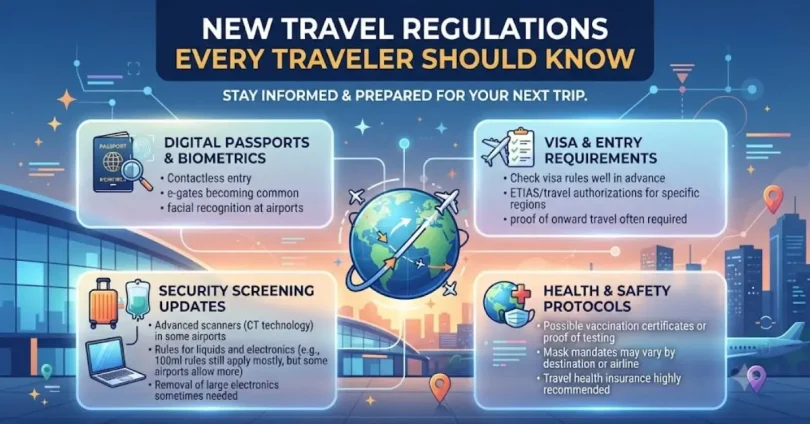
Modern travel regulations now involve much more than passport checks. Many countries have introduced digital travel authorization systems, biometric screening, online arrival forms, and electronic customs declarations.
Examples of common travel regulations include:
- Passport validity requirements
- Electronic Travel Authorization (ETA)
- Digital visas
- Biometric passport verification
- Customs declaration rules
- Carry-on baggage restrictions
- Security screening updates
- Health documentation requirements
Because every destination has unique requirements, travelers should always verify current regulations before departure.
Why is New Travel Regulations Every Traveler Should Know Important?
Understanding travel regulations protects travelers from unexpected problems that could ruin a trip.
Here are several reasons why staying informed is essential.
Prevents Boarding Denials
Airlines verify travel documents before passengers board international flights. Missing required documents can prevent boarding even before reaching immigration.
Avoids Immigration Problems
Immigration officers inspect passports, visas, travel authorization documents, and supporting paperwork. Being fully prepared increases the chances of smooth entry.
Saves Time
Completing online forms before departure often speeds up airport processing and reduces waiting times.
Reduces Travel Stress
Knowing exactly what documents are required removes uncertainty and makes travel more enjoyable.
Protects Your Budget
Unexpected visa fees, fines, additional hotel stays, or rebooking flights can become expensive if regulations are ignored.
Supports Safe International Travel
Health regulations, customs rules, and security measures help protect travelers and destination countries.
Detailed Step-by-Step Guide
Step 1: Check Passport Validity
Many countries require passports to remain valid for at least six months beyond the travel date.
Before booking flights:
- Check your passport expiration date.
- Renew it early if necessary.
- Ensure there are enough blank visa pages.
Never assume an almost-expired passport will be accepted.
Step 2: Verify Visa Requirements
Visa policies frequently change.
Some countries offer:
- Visa-free entry
- Visa on arrival
- Electronic visas
- Traditional embassy visas
Always confirm which option applies to your nationality before purchasing airline tickets.
Step 3: Understand Electronic Travel Authorization (ETA)
Many destinations now require electronic travel authorization instead of traditional visas.
These systems generally involve:
- Online application
- Passport information
- Travel details
- Security questions
- Processing fees
Approval often arrives electronically before departure.
Step 4: Complete Digital Arrival Forms
Many countries have replaced paper immigration forms with online systems.
These forms may request:
- Passport details
- Flight information
- Accommodation address
- Emergency contacts
- Travel history
Completing them early reduces delays after landing.
Step 5: Review Customs Regulations
Every country has restrictions on imported goods.
Common regulated items include:
- Food
- Plants
- Medicines
- Tobacco
- Alcohol
- Cash
- Electronics
Declaring restricted items honestly prevents fines and confiscation.
Step 6: Understand Airline Baggage Policies
Airline baggage rules continue changing.
Always review:
- Carry-on size limits
- Checked baggage allowance
- Battery restrictions
- Liquid regulations
- Sporting equipment policies
Packing correctly prevents additional airport charges.
Step 7: Prepare Health Documents
Some destinations still require specific health documentation depending on local conditions.
These may include:
- Vaccination records
- Medical certificates
- Prescription documentation
- Health declaration forms
Travelers with medications should carry prescriptions in English whenever possible.
Step 8: Learn About Biometric Screening
Modern airports increasingly use biometric technology.
Examples include:
- Facial recognition
- Fingerprint verification
- Electronic passport gates
- Automated immigration systems
These technologies speed up identity verification while improving security.
Step 9: Secure Digital Copies of Documents
Store electronic copies of:
- Passport
- Visa
- Flight tickets
- Hotel bookings
- Travel insurance
- Identification cards
Cloud storage allows quick access if original documents are lost.
Step 10: Purchase Travel Insurance
Although not mandatory everywhere, travel insurance provides valuable protection.
Coverage often includes:
- Medical emergencies
- Trip cancellation
- Lost baggage
- Flight delays
- Emergency evacuation
A relatively small premium can save thousands in unexpected expenses.
Step 11: Monitor Regulation Changes Before Departure
Travel regulations can change quickly.
Check official government announcements several days before your flight.
Reconfirm:
- Entry rules
- Visa requirements
- Airline policies
- Customs regulations
- Transit country requirements
This final review prevents last-minute surprises.
Benefits of New Travel Regulations Every Traveler Should Know

Understanding travel regulations offers numerous advantages.
- Faster airport processing
- Reduced immigration delays
- Better travel planning
- Lower risk of denied entry
- Increased travel confidence
- Improved personal safety
- Easier customs clearance
- Better protection of personal information
- Fewer unexpected expenses
- More enjoyable travel experiences
- Better compliance with international laws
- Greater peace of mind throughout the journey
Disadvantages / Risks
While regulations improve safety, they also introduce certain challenges.
- Frequent rule changes create confusion.
- Additional paperwork increases preparation time.
- Processing fees may raise travel costs.
- Some electronic systems experience technical issues.
- Digital applications require internet access.
- Travelers unfamiliar with online systems may struggle.
- Biometric systems raise privacy concerns for some individuals.
- Documentation errors may delay approval.
Despite these challenges, proper planning significantly reduces potential problems.
Common Mistakes to Avoid
Many travelers make simple mistakes that lead to unnecessary complications.
Booking Flights Before Checking Entry Rules
Always verify visa and entry requirements before purchasing tickets.
Ignoring Passport Expiration
Some travelers discover too late that their passport does not meet validity requirements.
Waiting Until the Last Minute
Apply for visas, travel authorization, and required documents well before departure.
Carrying Prohibited Items
Review customs and baggage restrictions before packing.
Forgetting Transit Requirements
Transit countries may have separate regulations even if you never leave the airport.
Providing Incorrect Information
Mistakes on visa applications or arrival forms can delay approval or cause entry refusal.
Not Purchasing Insurance
Unexpected medical emergencies abroad can become extremely expensive.
Failing to Save Document Copies
Lost passports or travel documents are easier to replace when digital backups exist.
FAQs
Why do travel regulations change so often?
Governments update regulations to improve border security, manage immigration, respond to health concerns, introduce new technology, and enhance passenger safety. Changes may also reflect diplomatic agreements or evolving international standards.
What is an Electronic Travel Authorization (ETA)?
An ETA is an online travel approval that allows eligible travelers to visit certain countries without obtaining a traditional visa. Travelers complete an online application before departure and receive approval electronically.
How early should I check travel regulations?
Ideally, begin checking requirements when planning your trip and verify them again a few days before departure because regulations may change unexpectedly.
Is travel insurance mandatory?
Some countries require travel insurance, while others simply recommend it. Even where it is optional, insurance provides financial protection against medical emergencies, cancellations, lost baggage, and travel disruptions.
Can airlines deny boarding if documents are incomplete?
Yes. Airlines are responsible for ensuring passengers meet destination entry requirements. Missing passports, visas, or travel authorization documents may result in denied boarding.
What should I do if travel regulations change after booking?
Contact your airline, embassy, or travel provider immediately. Review the updated requirements, adjust your documents if necessary, and allow extra preparation time before departure.
Expert Tips & Bonus Points
Experienced travelers follow several best practices that make international travel much easier.
- Renew passports well before expiration.
- Keep printed and digital copies of all documents.
- Use secure cloud storage for important files.
- Pack medications in original containers.
- Arrive at the airport earlier for international flights.
- Verify baggage allowances directly with your airline.
- Learn basic customs rules for your destination.
- Double-check passport details on every booking.
- Monitor travel updates until departure day.
- Keep emergency contact information easily accessible.
- Carry a backup payment method.
- Save local embassy contact information before traveling.
- Download offline maps and important travel documents.
- Use secure internet connections when submitting travel applications.
- Keep your phone fully charged while traveling through airports.
These habits greatly reduce travel-related stress and help ensure a smoother journey.
Conclusion
International travel is evolving rapidly, and keeping up with new travel regulations every traveler should know has become an essential part of trip planning. From passport validity rules and visa requirements to digital travel authorizations, biometric screening, health documentation, and customs procedures, every stage of the travel experience now involves updated regulations designed to improve security and efficiency.
The key to stress-free travel is preparation. Checking destination requirements early, organizing travel documents, understanding airline policies, and monitoring official updates before departure can prevent costly mistakes and unnecessary delays. Even experienced travelers benefit from reviewing regulations before every trip because entry requirements can change at any time.
Instead of viewing travel regulations as obstacles, think of them as tools that create safer and more organized international travel for everyone. A little research before your journey can save hours of inconvenience later. Whether you’re taking your first international vacation or traveling regularly for business, staying informed ensures a smoother airport experience, faster immigration processing, and greater peace of mind.
As global travel continues to modernize with digital systems and smarter border controls, informed travelers will always have an advantage. Make checking the latest travel regulations part of your travel routine, and you’ll be better prepared for every adventure that lies ahead.